
Quick Answer
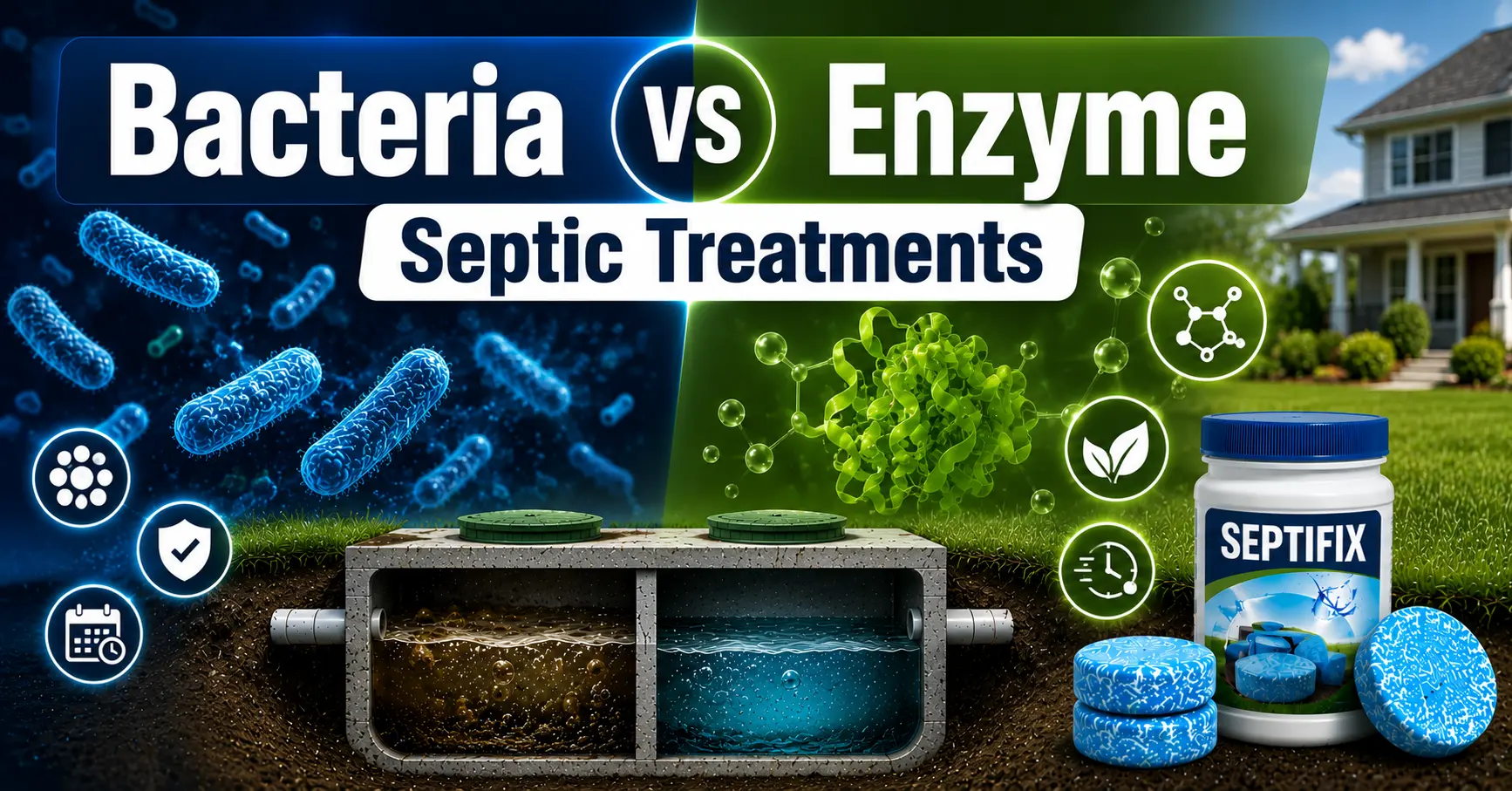
Bacteria are living organisms that consume and break down organic waste inside your septic tank. Enzymes are proteins that speed up specific chemical reactions, like breaking fats and proteins into smaller pieces bacteria can digest more easily. They work together, not against each other, and the most effective septic treatments, including Septifix, use both rather than relying on just one.
How Bacteria Treatments Work
Bacteria are living microorganisms, and in a septic tank, specific strains are responsible for consuming organic waste as part of their own metabolism. This is the core biological process your entire septic system depends on. Bacteria-based treatments introduce additional live bacteria into the tank, intended to supplement or restore populations that may have been reduced by harsh chemicals, antibacterial products, or heavy water use.
How Enzyme Treatments Work
Enzymes aren't alive, they're proteins that act as catalysts, speeding up specific chemical reactions without being consumed in the process. In a septic context, enzymes are typically used to break down larger, harder-to-digest waste, like fats, oils, proteins, and starches, into smaller molecules that bacteria can then consume more efficiently. Enzymes essentially do prep work that makes the bacteria's job easier.
Why It's Not Really An Either-Or Choice
Framing this as bacteria versus enzymes is a bit of a false choice. Since enzymes make waste easier for bacteria to break down, and bacteria are what actually consume and process that waste, the two work best as a team rather than as competing approaches. A product built around bacteria alone still benefits from enzyme support to handle tougher waste, and a product built around enzymes alone still needs healthy bacteria populations to finish the job. This is why most established septic treatments, Septifix included, combine both rather than picking one.
How Septifix Combines Both, Plus Oxygen
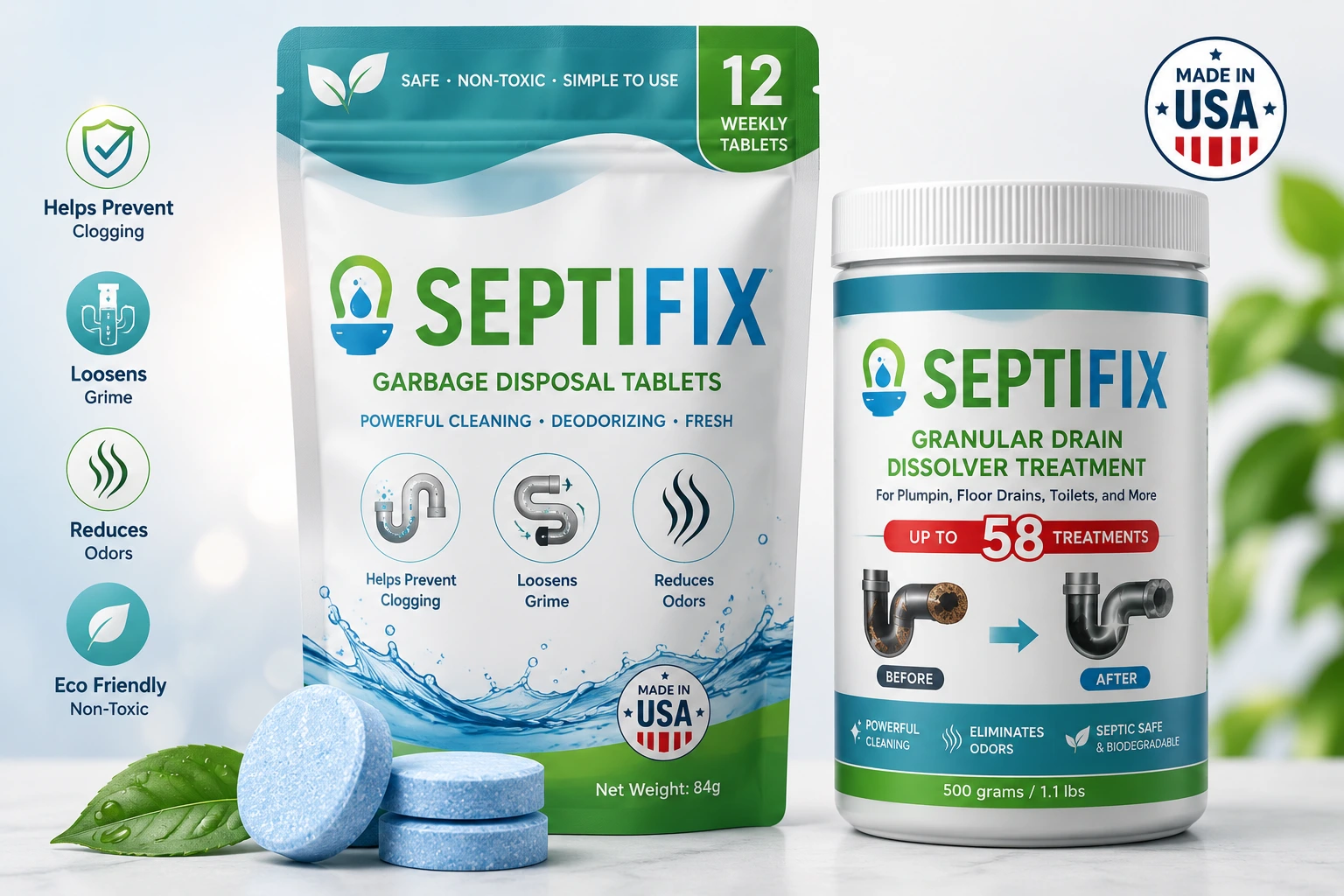
According to the manufacturer, Septifix is built around beneficial bacteria and enzymes together, with an additional oxygen-releasing component layered on top. The oxygen is intended to create more favorable conditions specifically for aerobic bacteria strains, which is a further differentiator from treatments that rely on bacteria and enzymes alone without addressing the oxygen environment those bacteria function best in. This three-part approach, bacteria to consume waste, enzymes to break down tougher material first, and oxygen to support the bacteria doing the work, is a more complete picture than either bacteria or enzymes in isolation. You can read our full breakdown of the formula in Septifix ingredients explained, and the complete product evaluation in our Septifix Review 2026.
See Current Septifix Pricing
A tablet built around bacteria, enzymes, and oxygen together.
Check Current PriceWhat To Look For On A Product Label
- Both bacteria and enzymes listed, rather than just one
- Specific bacteria strain types described, even if exact concentrations aren't disclosed
- No harsh chemical additives that could undermine the bacteria you're trying to support
- Clear usage instructions rather than vague claims
For a broader look at how to evaluate any septic treatment, not just this specific comparison, see our guide on best septic tank treatment for homeowners.
Frequently Asked Questions
Is Septifix a bacteria treatment or an enzyme treatment?
According to the manufacturer, Septifix combines both beneficial bacteria and enzymes, along with an oxygen-releasing formula, rather than relying on just one approach.
Which is more important, bacteria or enzymes?
Neither works as well without the other. Enzymes break down tougher waste into forms bacteria can consume, and bacteria do the actual work of processing that waste, so they function as a team.
Do bacteria-only treatments still work?
They can be effective, but treatments that also include enzymes are generally considered more comprehensive since they help break down waste that bacteria alone might process more slowly.
Why does Septifix add oxygen if bacteria and enzymes already work together?
According to the manufacturer, the added oxygen is intended to create better conditions specifically for aerobic bacteria strains, which is a separate consideration from the bacteria-enzyme relationship itself.
Final Thoughts
Bacteria and enzymes aren't competitors, they're complementary parts of the same biological process your septic system relies on. When evaluating a treatment product, the more useful question isn't "bacteria or enzyme," it's whether the product combines both effectively, and whether it addresses the broader conditions, like oxygen availability, that determine how well that combination actually performs.