

Quick Answer
The best septic tank treatments use bacteria and enzymes to support the natural breakdown of waste inside the tank, rather than harsh chemicals that can disrupt that process. For most homeowners looking for a simple, monthly routine, we recommend Septifix, a bacteria-and-enzyme tablet with an added oxygen-releasing formula, though it's worth understanding the full category before deciding what's right for your system.
What To Look For In A Septic Tank Treatment
A good septic tank treatment should generally offer:
- A bacteria-and-enzyme based formula rather than harsh chemicals
- Clear, simple usage instructions that fit into a routine you'll actually stick to
- Transparency from the manufacturer about what's in the product, even if the full proprietary formula isn't disclosed
- A reasonable, predictable cost that fits into your broader maintenance budget
- A manufacturer guarantee or return policy, which signals some level of confidence in the product
Types Of Septic Tank Treatments
Septic tank treatments generally fall into a few categories. Bacteria-and-enzyme based products are designed to support the natural biological processes already happening in your tank, and are the type most septic professionals consider septic-safe. Some treatments also include oxygen-releasing compounds, intended to create better conditions for aerobic bacteria specifically.
Chemical-based treatments exist too, but it's worth being cautious here. Harsh chemical additives can disrupt or kill the beneficial bacteria your septic system depends on, which is counterproductive to what a treatment is supposed to accomplish. When evaluating any product, checking whether it's bacteria-based versus chemical-based is one of the most useful things you can do.
Format also varies: tablets, liquids, and powders all exist, and the right one often comes down to which is easiest for you to use consistently. A powder or liquid that requires careful measuring is only effective if you actually measure it correctly every time, while a pre-dosed tablet removes that variable entirely.
It's also worth understanding what a treatment product is realistically meant to do. None of these categories are designed to repair a damaged tank, fix a collapsed drain field, or replace the physical removal of solids that happens during professional pumping. Their role is narrower: supporting the biological environment inside a properly functioning tank so it continues breaking down waste efficiently between services.
Our Top Pick: Septifix
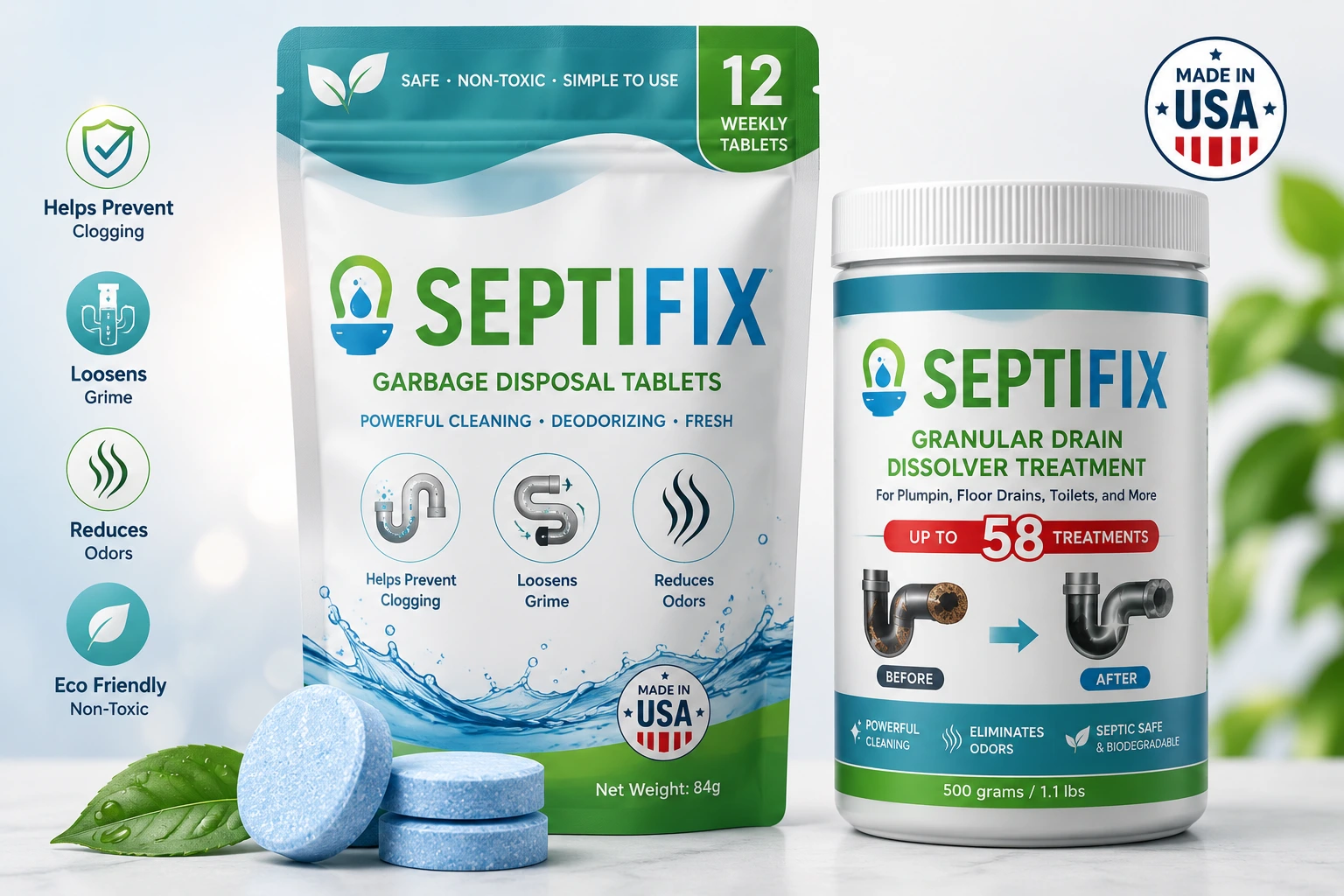
For most homeowners, we recommend Septifix. It's a bacteria-and-enzyme tablet that, according to the manufacturer, also includes an oxygen-releasing formula intended to support aerobic bacterial activity inside the tank. A few reasons it stands out among the options we've looked at:
- Tablet format with no measuring or mixing, just flush and go
- Designed for a simple monthly routine that's easy to stay consistent with
- An oxygen-releasing mechanism that many traditional bacteria-only treatments don't include
- A money-back guarantee offered through the official seller
We've covered it in much more depth, including ingredients, pros and cons, and real-world value, in our complete Septifix Review 2026. If you're weighing whether the cost is justified for your situation, is Septifix worth the price looks at it specifically from a value perspective.
See Current Septifix Pricing
Check availability and current pricing on the official website.
Check Current PriceOther Treatment Options Worth Knowing
Septifix isn't the only established name in this category. Rid-X, for example, has been a well-known bacteria-and-enzyme treatment for decades and remains widely available in stores, without the oxygen-releasing mechanism Septifix includes. It's a reasonable option for homeowners who want a simple, familiar product they can find locally rather than ordering online. We've put together a full side-by-side comparison in Septifix vs Rid-X if you want to weigh the two directly.
Beyond specific brands, the broader point is that bacteria-and-enzyme treatments as a category are generally considered septic-safe by professionals, which is the more important distinction than any single brand.
What To Avoid In A Septic Tank Treatment
- Products that rely primarily on harsh chemicals rather than bacteria and enzymes
- Vague marketing claims with no explanation of what's actually in the product
- Treatments marketed as a replacement for pumping or professional inspection, no legitimate product replaces those
- Extremely cheap products with no guarantee or clear manufacturer information behind them
How To Choose The Right One For Your Home
Start with your maintenance habits. If you want something you'll actually remember to use, a simple monthly tablet tends to have better real-world consistency than a liquid that requires measuring. From there, consider whether an oxygen-releasing formula matters to you specifically, and whether you'd rather buy online through an official website or pick something up locally at a store.
It's also worth thinking about your household's specific circumstances. A larger household with heavier water use may benefit from a more robust routine that pairs a monthly treatment with more frequent professional check-ins, while a smaller household with a properly maintained system may find a simple, consistent monthly habit is all they need alongside standard pumping. If you manage more than one property, our guide on Septifix for landlords covers how to build a maintenance routine that scales across a portfolio.
Whatever you choose, remember that a treatment product complements, but doesn't replace, professional pumping on the schedule covered in how often to pump a septic tank.
Frequently Asked Questions
What is the best type of septic tank treatment?
Bacteria-and-enzyme based treatments are generally considered the safest and most effective category, since they support the natural processes already happening in your tank rather than introducing harsh chemicals.
Is Septifix better than Rid-X?
Both are legitimate bacteria-and-enzyme treatments. Septifix adds an oxygen-releasing formula and a tablet format with no measuring, while Rid-X is a long-established, widely available option. See our full Septifix vs Rid-X comparison for a detailed breakdown.
Can a septic tank treatment replace professional pumping?
No. No legitimate treatment product replaces the need for regular professional pumping and inspection. Treatments are designed to support routine maintenance between those services.
Are chemical septic tank treatments safe?
Harsh chemical additives can disrupt or kill the beneficial bacteria your system relies on, which works against the goal of a treatment product. Bacteria-and-enzyme based formulas are generally the safer, more widely recommended choice.
Final Thoughts
The best septic tank treatment for your home is one that's bacteria-based, easy enough to use consistently, and realistic about what it can and can't do. For most homeowners looking for a simple, low-effort monthly option, Septifix is our top recommendation, though established alternatives like Rid-X remain reasonable choices depending on your preferences. Whichever you choose, treat it as one part of a complete maintenance routine, not a substitute for professional service.