
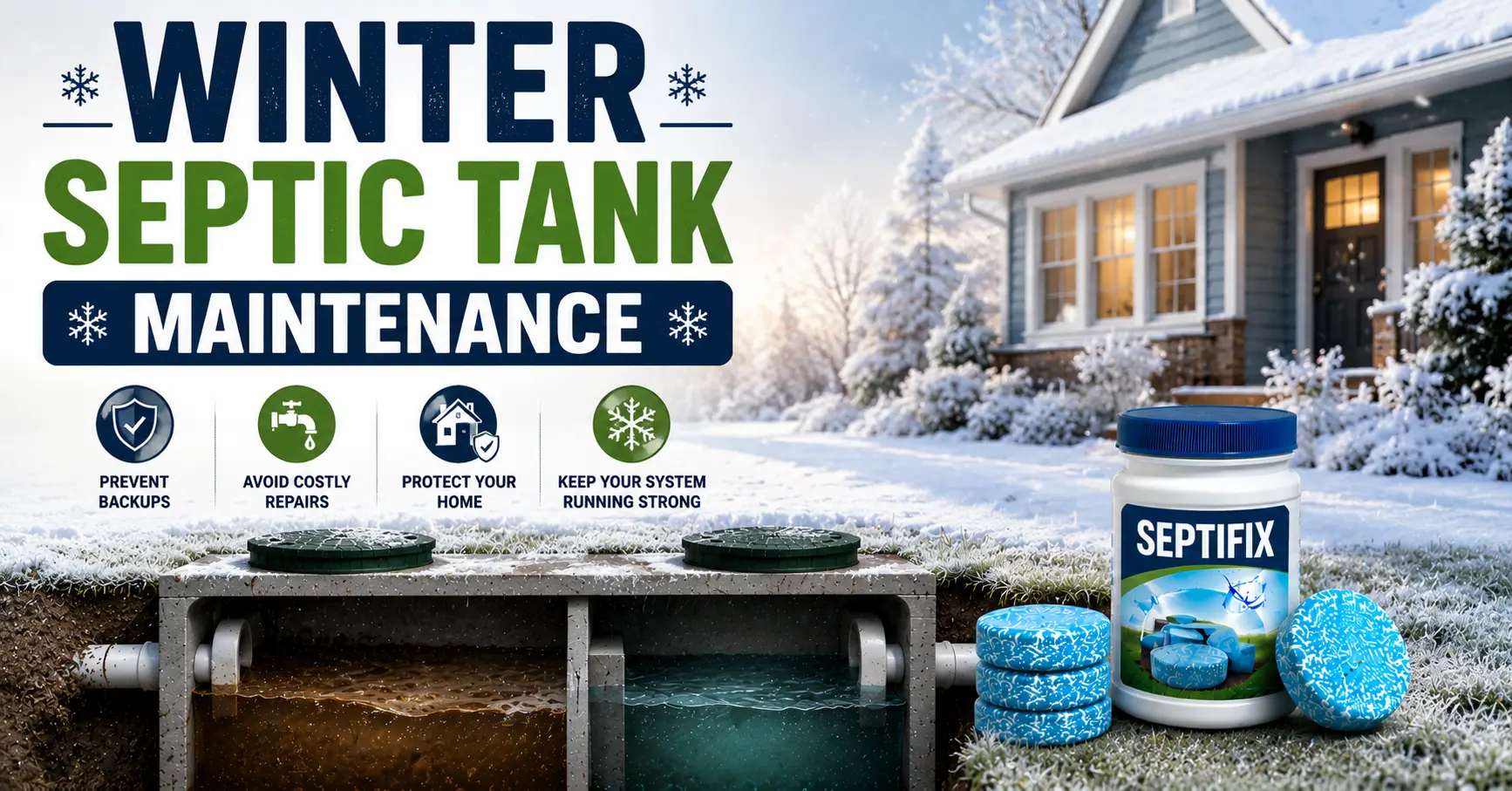
Quick Answer
Preparing a septic system for winter mainly means preventing freezing, adding insulation or extra soil cover over shallow pipes and tank components, keeping the tank active with regular use and consistent bacterial activity, and avoiding compacting snow over the tank and drain field, which reduces its natural insulating effect. Staying on your regular pumping schedule going into winter also matters, since emergency service is harder to arrange when the ground is frozen.

Why Winter Poses A Unique Risk
Septic systems are buried below the frost line in most areas specifically to avoid freezing, but shallow pipes, poorly insulated areas, or tanks in unusually cold regions can still be at risk. A frozen line stops wastewater from moving at all, which can mean backups inside the home right when you least want to deal with one. Winter also makes emergency repairs slower and more expensive, frozen ground is harder to excavate.
Preventing A Frozen Septic System
- Add extra mulch or straw over the tank and pipe area for additional insulation before the ground freezes
- Avoid driving over or compacting snow above the tank and drain field, compacted snow insulates far less effectively than loose snow
- Keep grass a bit longer going into winter in the area above the system for natural insulation
- Insulate any exposed or shallow pipes, particularly in areas with harsh winters
- Fix any known shallow-pipe issues before cold weather arrives rather than during a freeze
Snow And The Drain Field
Counterintuitively, a layer of undisturbed snow actually helps insulate the ground above your septic system, trapping heat and helping prevent freezing. The risk comes from compacting that snow, through vehicle traffic, heavy foot traffic, or plowing snow into piles directly over the system, which reduces its insulating value and can contribute to freezing. Keep the area above your tank and drain field as undisturbed as possible through winter.
See Current Septifix Pricing
Support tank health year-round, including through the colder months.
Check Current PriceBacterial Activity In Cold Weather
Bacterial activity inside the tank slows somewhat in colder temperatures, since biological processes generally run more slowly in the cold, though a properly insulated, buried tank stays warmer than the surface air temperature. Keeping the system in regular use through winter, rather than letting a seasonal property sit completely vacant, helps maintain bacterial activity and warmth from ongoing wastewater flow. A monthly treatment like Septifix, designed according to the manufacturer to support bacterial populations, is a reasonable habit to maintain through the colder months specifically because bacterial activity can already be under some seasonal stress. You can read the complete product breakdown in our Septifix Review 2026.
Pre-Winter Checklist
- Schedule pumping before winter if you're due, rather than waiting until the ground freezes
- Add insulation or extra cover to any known shallow or exposed pipe sections
- Confirm the tank access lid is properly sealed and marked so it's easy to locate under snow if needed
- Keep your maintenance treatment routine going through the season rather than pausing it
If you're not sure whether you're due for pumping before winter hits, our guide on how often to pump a septic tank can help you check.
Signs Your System May Be Freezing
- Slow drains that coincide with a hard freeze
- Gurgling sounds that appear specifically during very cold weather
- No drainage at all from one or more fixtures during a cold snap
- Sewage odors appearing suddenly during freezing conditions
If you suspect a freeze, a professional experienced with winter septic issues is the right call rather than attempting to thaw pipes yourself, which can risk damage if done incorrectly.
Frequently Asked Questions
Can a septic tank freeze?
It's uncommon for a properly buried tank below the frost line, but shallow pipes, poorly insulated components, or unusually harsh winters can still cause freezing issues in some systems.
Should I stop using a treatment product in winter?
No, keeping a consistent maintenance routine through winter, including a monthly treatment, is generally recommended rather than pausing it, since bacterial activity may already be under some seasonal stress from the cold.
Is it safe to drive over my drain field in winter?
No, driving over the drain field compacts snow and soil, reducing natural insulation and potentially damaging the system, in winter or any other season.
What should I do if my septic system freezes?
Contact a professional experienced with winter septic issues. Attempting to thaw pipes yourself can risk further damage if not done correctly.
Final Thoughts
Winter septic problems are largely preventable with a little preparation: insulate exposed areas, avoid compacting snow over the system, stay current on pumping before the ground freezes, and keep your regular maintenance routine going through the colder months rather than pausing it. A bit of planning before the first freeze is far easier than dealing with a frozen system in the middle of January.