
Quick Answer
A properly functioning, demand-initiated water softener generally doesn't cause significant harm to a healthy septic system. The main concerns, salt brine from the regeneration cycle and the added water volume discharged into the tank, are real but manageable, especially with a correctly sized and well-maintained system. The older advice to never use a water softener with septic is largely considered outdated by current research.
How Water Softeners Discharge Into Septic
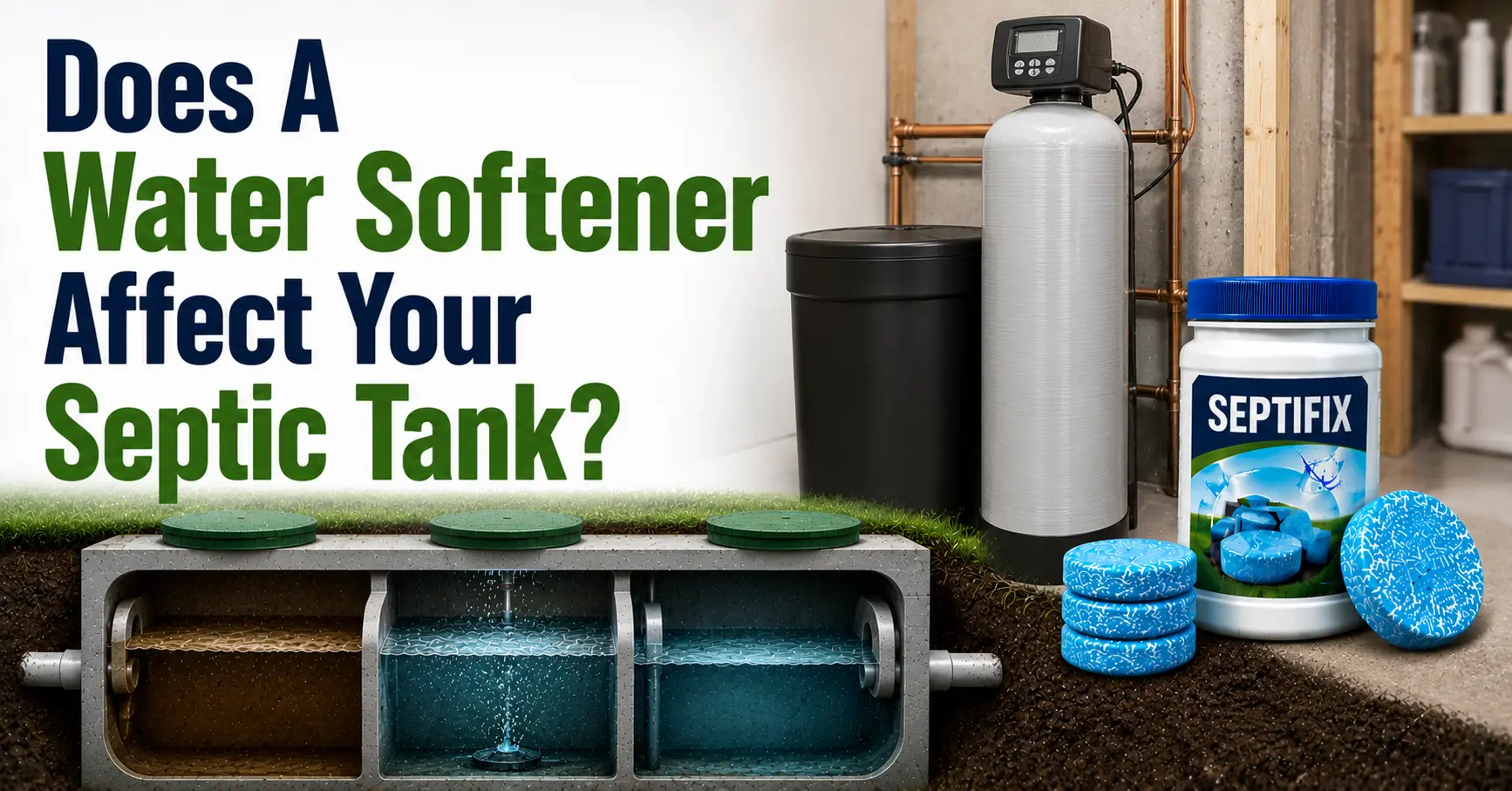
Water softeners work by exchanging calcium and magnesium ions in hard water for sodium ions using a resin bed. Periodically, the resin needs to be regenerated using a salt brine solution, and this backwash water, carrying the displaced minerals and excess salt, has to go somewhere. In most homes on septic, it drains into the septic system along with all other household wastewater.
The Salt Brine Concern
The concern most commonly raised is that the salt brine from regeneration cycles could harm the bacteria in your septic tank. At very high concentrations, salt is indeed harmful to bacteria. However, by the time brine from a typical demand-initiated softener is diluted with the household's normal wastewater, concentrations reaching the tank are generally well below levels that research has shown to significantly harm septic bacterial populations. The concern is more valid for older, timer-based softeners that regenerate more frequently and discharge more brine than is actually needed.
The Water Volume Concern
A more practical concern is the volume of water a regeneration cycle discharges, typically 50 to 100 gallons depending on the softener model. This water enters your tank during a cycle, which can disrupt settled solids and add hydraulic load. For a properly sized tank, this is generally manageable. For a smaller or already-stressed system, it's a more meaningful consideration.
See Current Septifix Pricing
Support your tank's bacterial health as part of a broader maintenance routine.
Check Current PriceWhat Current Research Shows
Studies conducted over the past couple of decades, including research from the Water Quality Association and several university extension programs, have generally found that modern demand-initiated water softeners don't significantly harm properly sized, well-maintained septic systems. The older blanket advice against using any water softener on septic was based on earlier, less efficient softener technology and has been largely revised in current professional guidance, though individual circumstances still vary.
Best Practices If You Have Both
- Use a demand-initiated (on-demand) softener rather than a timer-based one, which regenerates only when needed and discharges less brine overall
- Set the softener to the lowest effective hardness setting rather than overcorrecting
- Avoid scheduling regeneration cycles at the same time as other high-water-use activities like laundry or dishwasher cycles
- Make sure your tank is properly sized for your household's total water use, factoring in softener discharge
Supporting Bacterial Health When You Have A Softener
Even if brine concentrations don't reach harmful levels, maintaining a healthy bacterial population is a reasonable priority for any septic homeowner, but particularly if your system is regularly receiving backwash discharge. A monthly treatment like Septifix is designed, according to the manufacturer, to support the bacterial activity your tank depends on, which is a sensible habit regardless of whether you have a softener. You can read more about how that works in our Septifix Review 2026 and bacteria vs enzyme septic treatments.
Frequently Asked Questions
Can a water softener kill septic bacteria?
At very high concentrations, salt can harm bacteria. However, brine from a properly functioning demand-initiated softener is typically diluted to levels that research shows don't significantly harm septic bacterial populations in a healthy, properly sized system.
Should I discharge my water softener away from the septic tank?
Some homeowners route backwash to a separate dry well or gravel pit instead of the septic system, which is a reasonable option if your local regulations allow it. Check with your local health department before making plumbing changes.
Does a water softener mean I need to pump my septic tank more often?
Not necessarily, but the added water volume from regeneration cycles is worth factoring into your overall water use when determining your pumping schedule.
Are salt-free water conditioners better for septic systems?
Salt-free conditioners don't produce brine discharge, which eliminates that specific concern, though they work differently from traditional softeners and may not be equally effective for all water hardness levels.
Final Thoughts
A modern, demand-initiated water softener used correctly is generally compatible with a healthy, properly sized septic system. The blanket advice against them is largely outdated. The practical steps, using an on-demand model, not over-softening, and staying current on tank maintenance, are what actually determine whether the two coexist without problems.