
Quick Answer
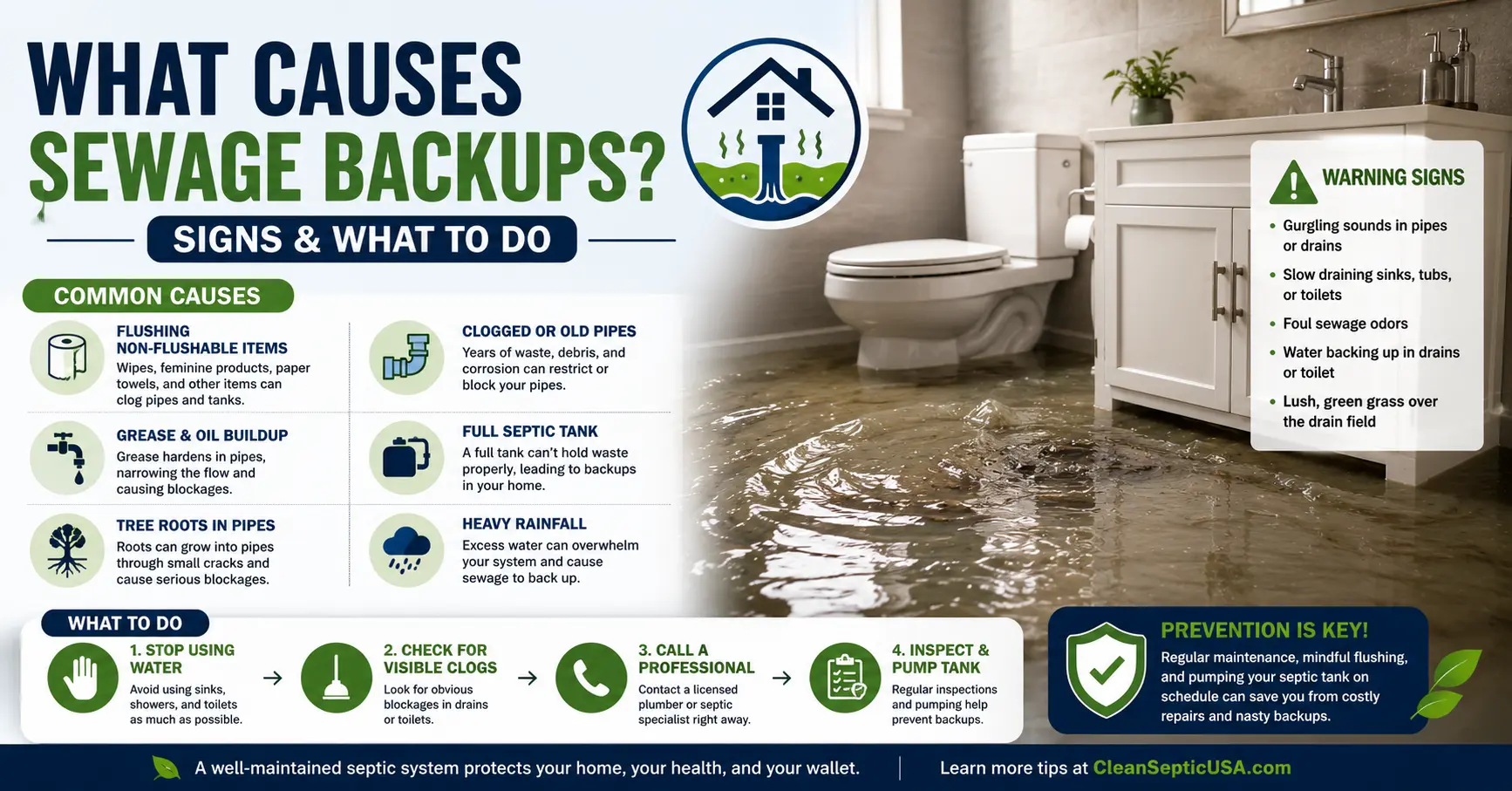
Sewage backups are most commonly caused by an overfull septic tank, a clogged pipe between the house and the tank, a failing drain field, or tree root intrusion. A backup should be treated as urgent, avoid using water in the home and contact a licensed septic professional as soon as possible.
Common Causes Of Sewage Backups
An Overfull Septic Tank
When a tank exceeds capacity, wastewater has nowhere to go but back toward the house, particularly if the tank is significantly overdue for pumping.
A Clogged Main Line
Wipes, grease, or other debris can clog the pipe running from the house to the tank, blocking wastewater from leaving the home at all.
A Failing Drain Field
If the drain field can no longer absorb wastewater, whether from oversaturation, age, or damage, the system backs up because it has nowhere else to send treated liquid.
Tree Root Intrusion
Roots seeking moisture can grow into pipes over time, creating blockages that restrict or completely stop wastewater flow.
Excessive Water Use
A sudden spike in water use, like back-to-back loads of laundry or a house full of guests, can temporarily overwhelm a system that was already close to capacity.
Early Warning Signs Before A Full Backup
- Gurgling sounds from toilets or drains
- Slow drainage throughout multiple fixtures at once
- Sewage odors indoors or near the septic tank
- Water pooling around floor drains
Gurgling in particular is often one of the earliest signals. Our guide on why is my toilet gurgling covers this specific sign in more detail, and signs your septic tank is full covers the broader set of warning signs worth watching for.
What To Do If A Backup Happens
- Stop using water in the home immediately, no flushing, showering, or running faucets
- Avoid direct contact with sewage, which can pose a health risk
- Contact a licensed septic or plumbing professional as soon as possible
- If safe to do so, note which fixtures are affected, this can help the professional diagnose the cause faster
See Current Septifix Pricing
Support routine tank health as part of preventing overfill-related backups.
Check Current PriceWhat Not To Do
- Don't keep using water hoping the problem resolves itself
- Don't attempt to clear a suspected main line clog with harsh chemical drain cleaners
- Don't ignore repeated minor backups, they tend to indicate a developing problem that will get worse
Preventing Future Backups
- Stay on a consistent pumping schedule, covered in how often to pump a septic tank
- Avoid flushing wipes, paper towels, and grease
- Space out heavy water use rather than overloading the system at once
- Keep trees and deep-rooted plants away from pipes and the drain field
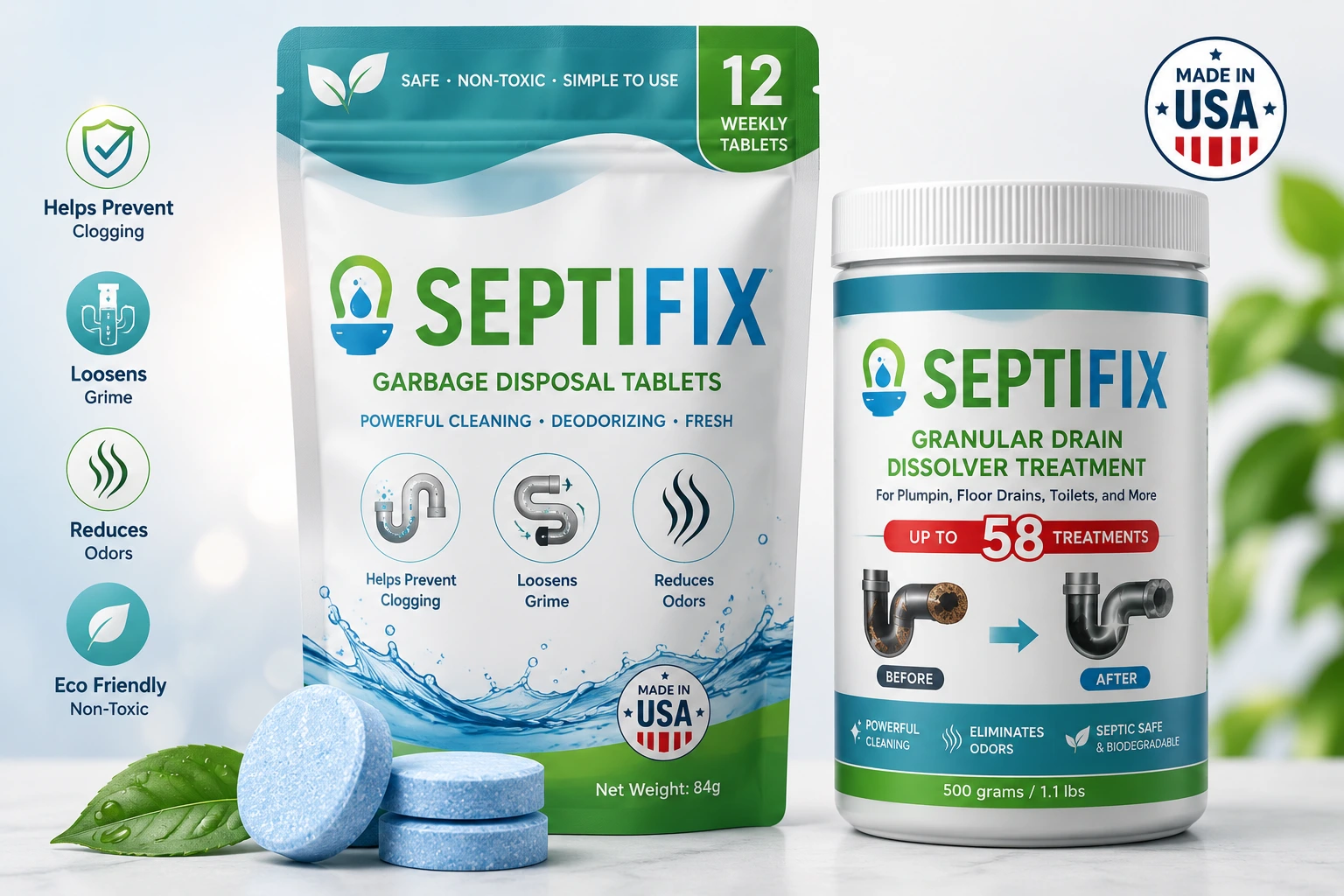
- Consider a monthly septic tank treatment to support routine bacterial activity between services
A treatment product like Septifix won't clear an existing clog or repair a failing drain field, but according to the manufacturer, it's designed to support the bacterial activity that helps prevent the kind of buildup that contributes to an overfull tank in the first place. You can read our complete breakdown in the Septifix Review 2026.
Frequently Asked Questions
Is a sewage backup an emergency?
Yes, sewage backups should be treated as urgent. Stop using water in the home and contact a licensed professional as soon as possible.
Can I use a plunger on a sewage backup?
A plunger may help with a single fixture clog, but a backup affecting multiple drains usually indicates a bigger issue further down the line that a plunger won't resolve.
How much does it cost to fix a sewage backup?
It depends heavily on the cause, a simple clog is far less expensive than a failed drain field or tank issue. Getting a professional diagnosis first is the best way to understand your actual cost.
Can a septic tank treatment prevent backups?
It may help support the conditions that reduce the risk of an overfull tank, but it doesn't address clogs, root intrusion, or a failing drain field, which require professional attention.
Final Thoughts
Sewage backups are stressful, but they're rarely completely random, there's almost always an identifiable cause, and often early warning signs beforehand. Paying attention to gurgling, slow drains, and odors, and staying consistent with pumping and mindful water use, is the best way to avoid finding yourself in an emergency situation.