
Quick Answer
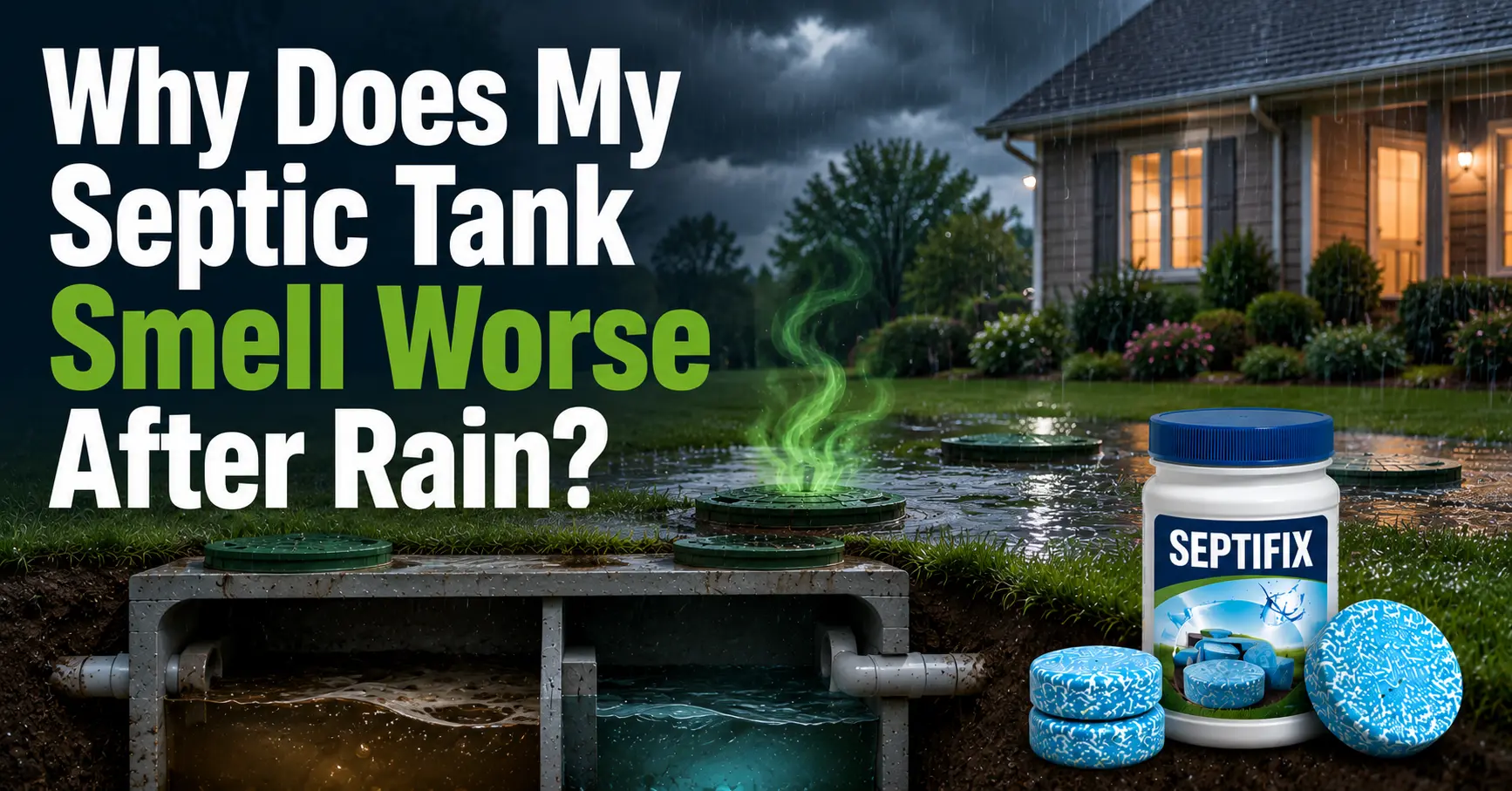
Septic odor often gets worse after rain because saturated soil slows how quickly the drain field can absorb wastewater, which can push odor and gas closer to the surface. This is often temporary and resolves as the ground dries out. If the smell persists well after the rain has passed, it may indicate a drain field or tank issue rather than a normal, temporary reaction to weather.

Why Rain Affects Septic Odor
Your drain field relies on soil to gradually absorb and filter wastewater. Heavy rain saturates that same soil, which reduces its capacity to absorb anything additional for a period of time. When the ground is already full of rainwater, wastewater from your system has a harder time being absorbed properly, and gases that would normally dissipate underground can surface more easily instead.
Is This Normal?
To some degree, yes. A mild, temporary increase in odor during and shortly after heavy rain is a fairly common experience for septic homeowners, and doesn't necessarily indicate a problem with the system itself. What matters is what happens next: normal, temporary saturation should clear up within a day or two once the ground has a chance to dry out.
When After-Rain Smell Signals A Bigger Problem
- The smell persists for several days after the rain has stopped and the ground has dried
- Standing water remains over the drain field well after other areas of the yard have drained
- The smell is accompanied by slow drains or gurgling inside the house
- This pattern repeats with every rainfall, even light ones
If any of these apply, it's worth looking beyond "it's just the rain" as an explanation. A drain field that's already struggling will show it most clearly during and after rain, since saturation adds stress to a system that may already be near its limit. Our guide on common drain field problems covers the signs of a field that needs attention.
See Current Septifix Pricing
Support your tank's efficiency as part of managing weather-related odor spikes.
Check Current PriceWhat To Do When It Happens
- Reduce household water use temporarily during and right after heavy rain to ease the load on the system
- Give the ground time to dry before assuming there's a deeper issue
- Note how long the smell lasts and whether it's getting worse over successive rain events
- Check your pumping history, since an overfull tank makes rain-related saturation worse
Reducing The Impact Of Heavy Rain
You can't control the weather, but you can reduce how much strain your system is under when rain hits. Staying current on your pumping schedule, covered in how often to pump a septic tank, means your tank has more available capacity going into a heavy rain event rather than being already close to full. Keeping the drain field free of compaction and root intrusion also helps it absorb water as efficiently as possible when conditions are already working against it. A monthly septic tank treatment, like Septifix, is designed to support the bacterial activity that helps the tank process waste efficiently between services, according to the manufacturer, which may help reduce how dramatically rain events affect your system. You can read more in our complete Septifix Review 2026.
Frequently Asked Questions
How long should septic smell last after rain?
A day or two as the ground dries out is generally considered normal. Smell that persists well beyond that, especially alongside standing water, is worth investigating further.
Does heavy rain damage a septic system?
Occasional heavy rain typically doesn't cause lasting damage on its own, but a system that's already struggling, an overfull tank or a compromised drain field, is more likely to show visible problems during and after rain.
Should I avoid using water during heavy rain?
Reducing water use during and shortly after a heavy rain event is a reasonable precaution, since it eases the load on a drain field that's already dealing with saturated soil.
Can a full tank make rain-related smell worse?
Yes, a tank that's already near capacity has less buffer to handle the added stress of a saturated drain field, which can make odor and other symptoms more noticeable during rain.
Final Thoughts
A septic smell that shows up during or right after heavy rain and clears within a day or two is a fairly normal response to temporarily saturated soil. If it lingers, worsens over time, or comes with other warning signs, it's a signal to look more closely at your tank and drain field rather than waiting for the next dry spell to sort itself out.