
Quick Answer
Yes, you can use a garbage disposal with a septic system, but it adds more solid waste to the tank than a household without one, which can mean more frequent pumping and a heavier load on the tank's bacteria. Used sparingly for small scraps, a disposal is manageable. Used heavily as a substitute for a trash can, it's one of the more common ways homeowners unintentionally overload their system.
What A Garbage Disposal Does To Your Tank
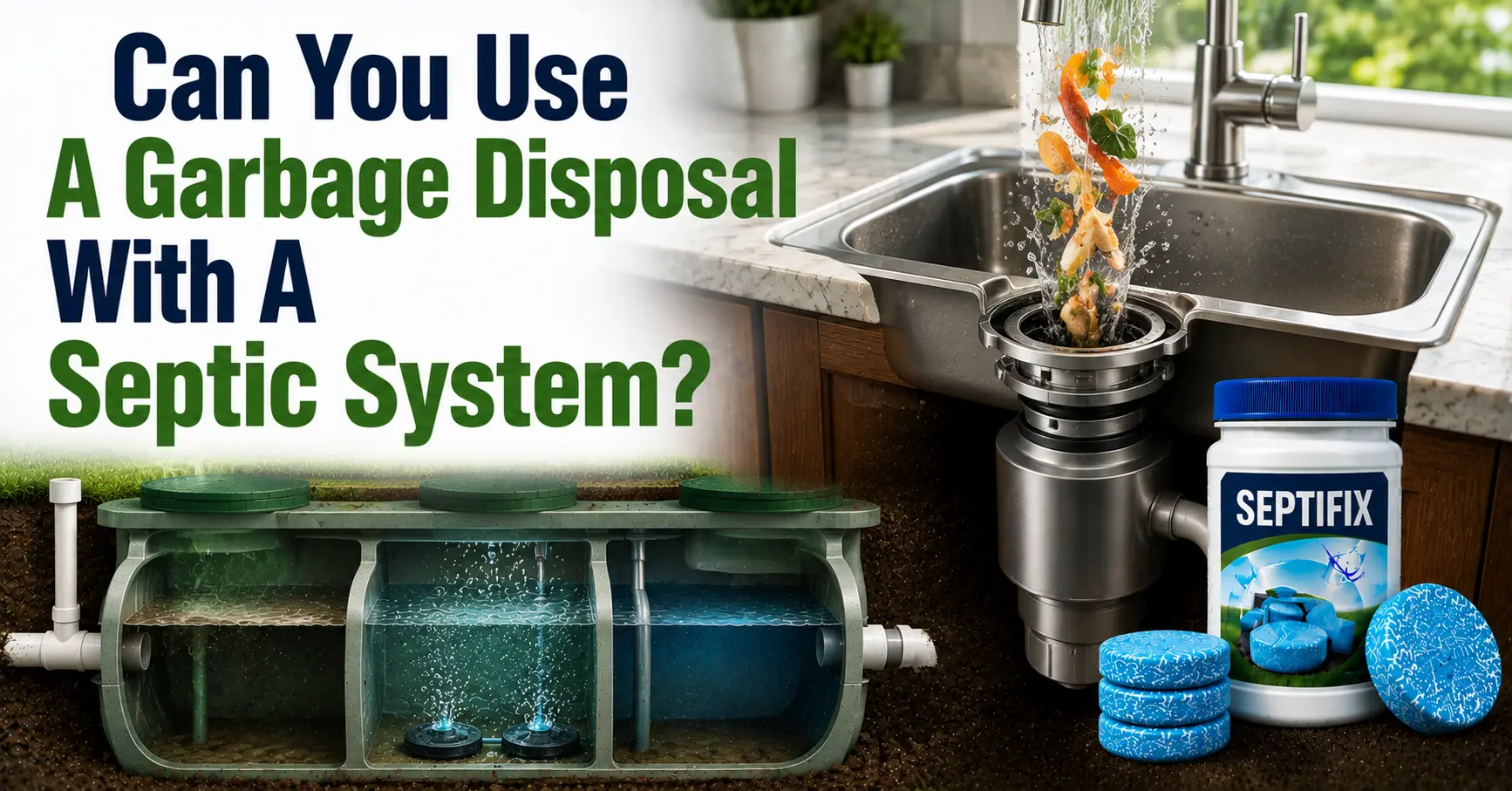
A garbage disposal grinds food waste into smaller particles before it enters your plumbing, which sounds like it should make things easier on your septic system. In practice, it just changes the form of the waste, not the total volume. All of that ground food material still ends up in your tank, where it becomes additional solids for bacteria to break down and, eventually, additional sludge that needs to be physically pumped out.
The Real Risk: Volume, Not Just Presence
Having a disposal isn't inherently a problem, how it's used is what matters. A household that occasionally uses a disposal for small scraps adds a manageable amount of extra solids. A household that uses it as a primary method of food waste disposal, grinding up meal prep scraps, coffee grounds, and leftovers daily, is meaningfully increasing the solids load on a system with a fixed capacity. This is one of the more common, and more avoidable, reasons a septic tank fills up faster than expected.
What Never To Put Down A Disposal On Septic
- Grease, oil, and fat, which congeal and clog pipes regardless of grinding
- Coffee grounds, which accumulate as sludge and don't break down well
- Fibrous vegetable scraps like celery or corn husks
- Bones, eggshells, and other hard materials that add disproportionate solid volume
- Large quantities of any food waste at once
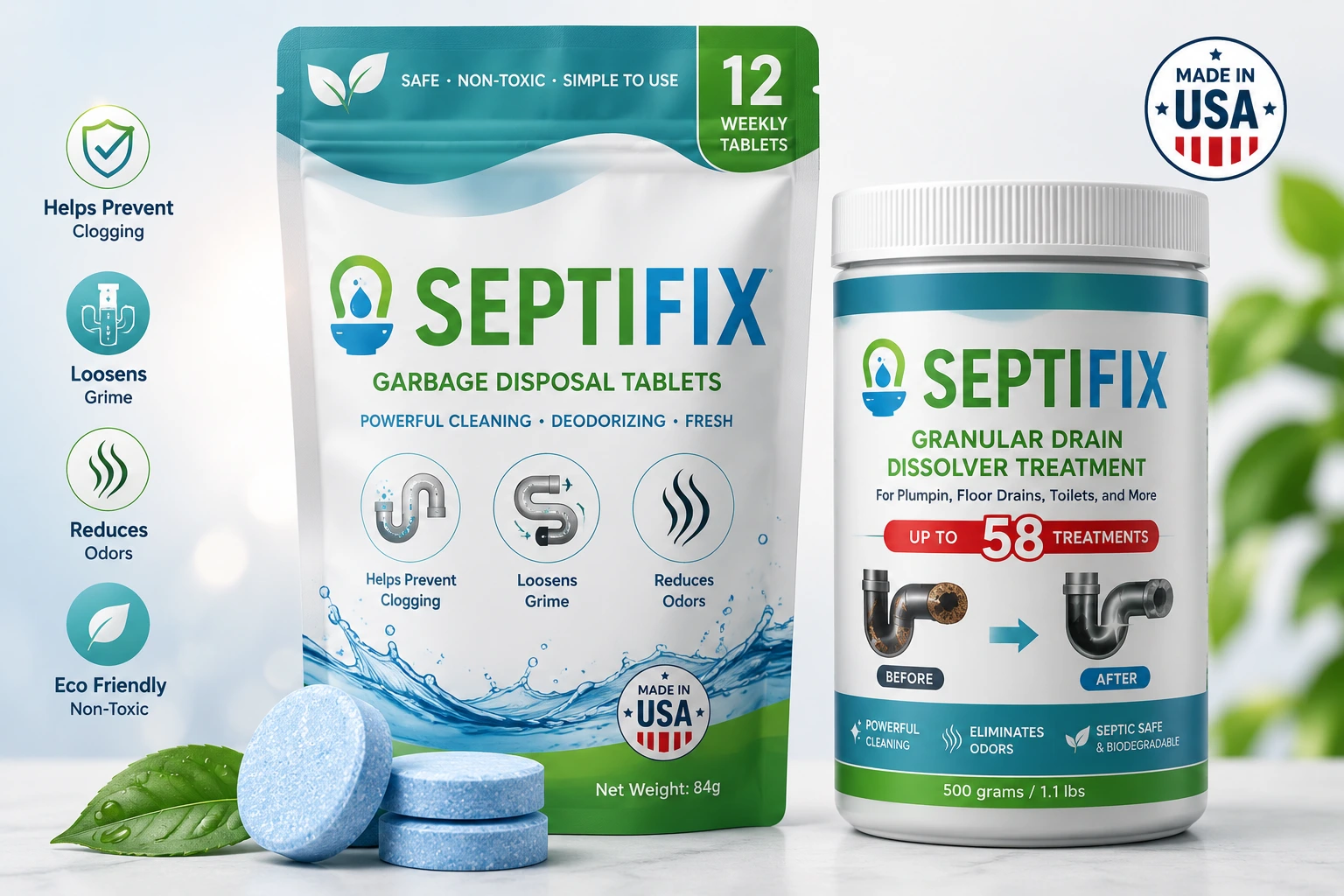
See Current Septifix Pricing
Support bacterial activity if you're managing a heavier household waste load.
Check Current PriceUsing A Disposal Responsibly
- Use it for small, occasional scraps rather than as your primary food waste method
- Run plenty of water while using it to help waste move through the system
- Consider composting food scraps instead of the disposal when practical
- Avoid the items listed above regardless of how minor they seem
Do You Need A Septic-Rated Disposal?
Some disposals are marketed as "septic safe," generally meaning they grind waste more finely. This can be a reasonable upgrade if you use one regularly, but it doesn't eliminate the underlying dynamic. More ground food waste is still more waste entering your tank, regardless of how finely it's processed.
Adjusting Your Maintenance Routine
If your household uses a garbage disposal regularly, factor that into your maintenance routine. This may mean pumping somewhat more frequently than the standard guideline in our how often to pump a septic tank guide, and it's a good reason to stay consistent with a monthly bacteria-and-enzyme treatment to help support waste breakdown between services. You can read more in our Septifix Review 2026.
Frequently Asked Questions
Will a garbage disposal ruin my septic system?
Not on its own, but heavy regular use adds meaningfully more solid waste to your tank and can require more frequent pumping if not accounted for in your maintenance routine.
Should I remove my garbage disposal if I have a septic tank?
Not necessarily. Used sparingly for small scraps, a disposal is manageable for most systems. Heavy routine use as a substitute for a trash can is what causes problems.
Are septic-safe garbage disposals worth it?
They can help by grinding waste more finely, but they don't eliminate the added solids load. They're a reasonable upgrade for households that already use a disposal regularly.
Does using a garbage disposal mean I need to pump more often?
It can, especially with heavy daily use. Discuss your specific usage with a septic professional to adjust your pumping schedule accordingly.
Final Thoughts
A garbage disposal and a septic system can coexist, but they're not a neutral combination. The disposal doesn't reduce waste, it just changes its form before sending it into your tank. Using it sparingly, avoiding the items that cause the most trouble, and adjusting your maintenance routine to account for the extra load are the key habits that keep the two compatible long-term.