
Quick Answer
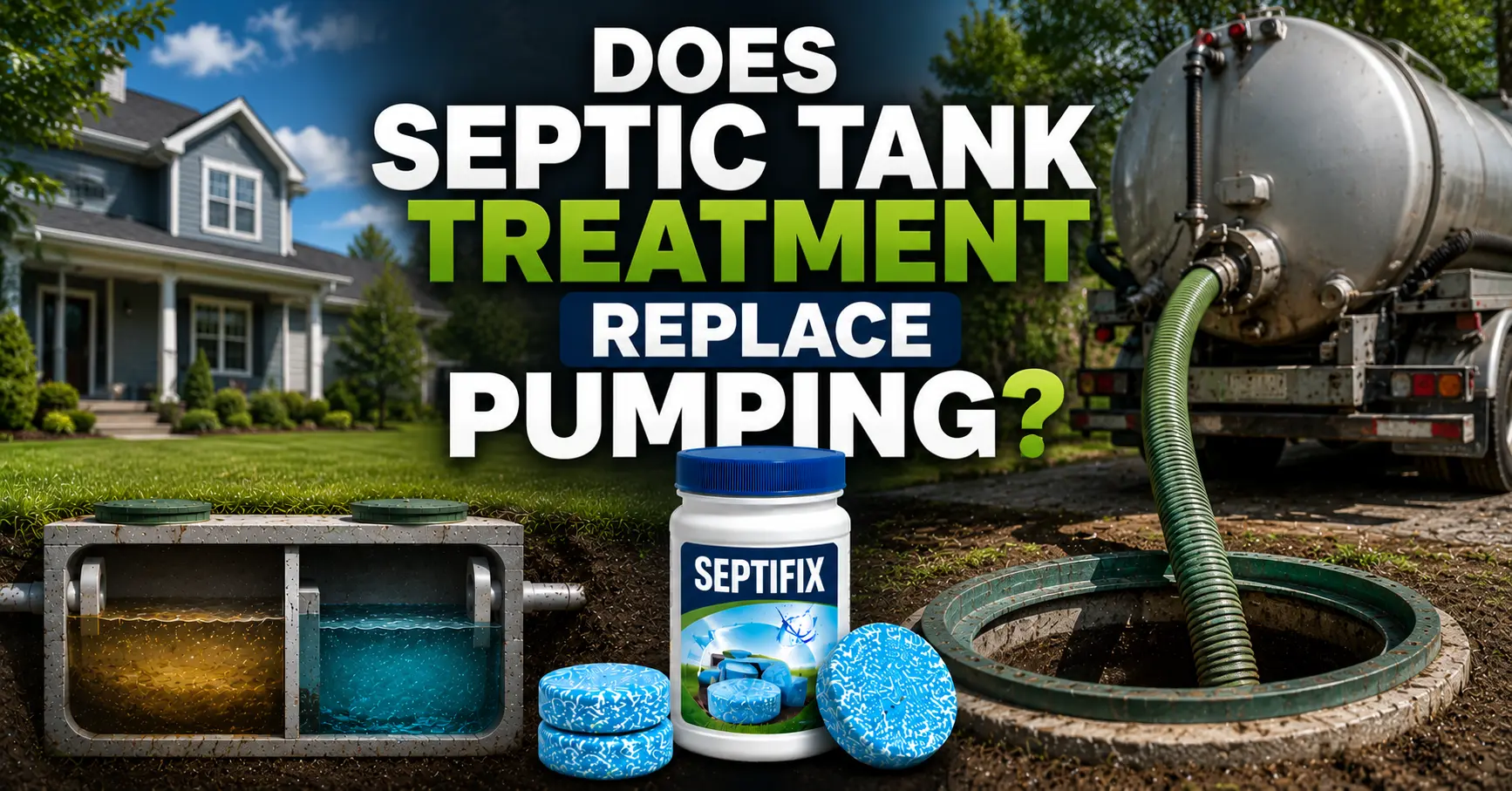
No. Septic tank treatment does not replace professional pumping. Treatment products support the bacterial breakdown of waste, but they don't remove the solid sludge and scum that physically accumulate in the tank over time, that removal is what pumping does, and no bacteria-and-enzyme product replaces that physical process.
Why This Question Comes Up
It's a reasonable question to ask, especially given how some products are marketed. Terms like "breaks down waste" and "reduces sludge" can sound like they're describing the same outcome pumping achieves. The confusion is understandable, but the actual mechanisms are different enough that the answer is genuinely no, not just a cautious hedge.
What Pumping Actually Does
Professional pumping physically removes the accumulated solids, sludge at the bottom and scum at the top, from the tank using a vacuum truck. This is a mechanical removal process. No matter how efficiently bacteria break down waste, some solid material doesn't fully decompose and gradually builds up over years. Pumping is the only process that physically removes that buildup.
What Treatment Actually Does
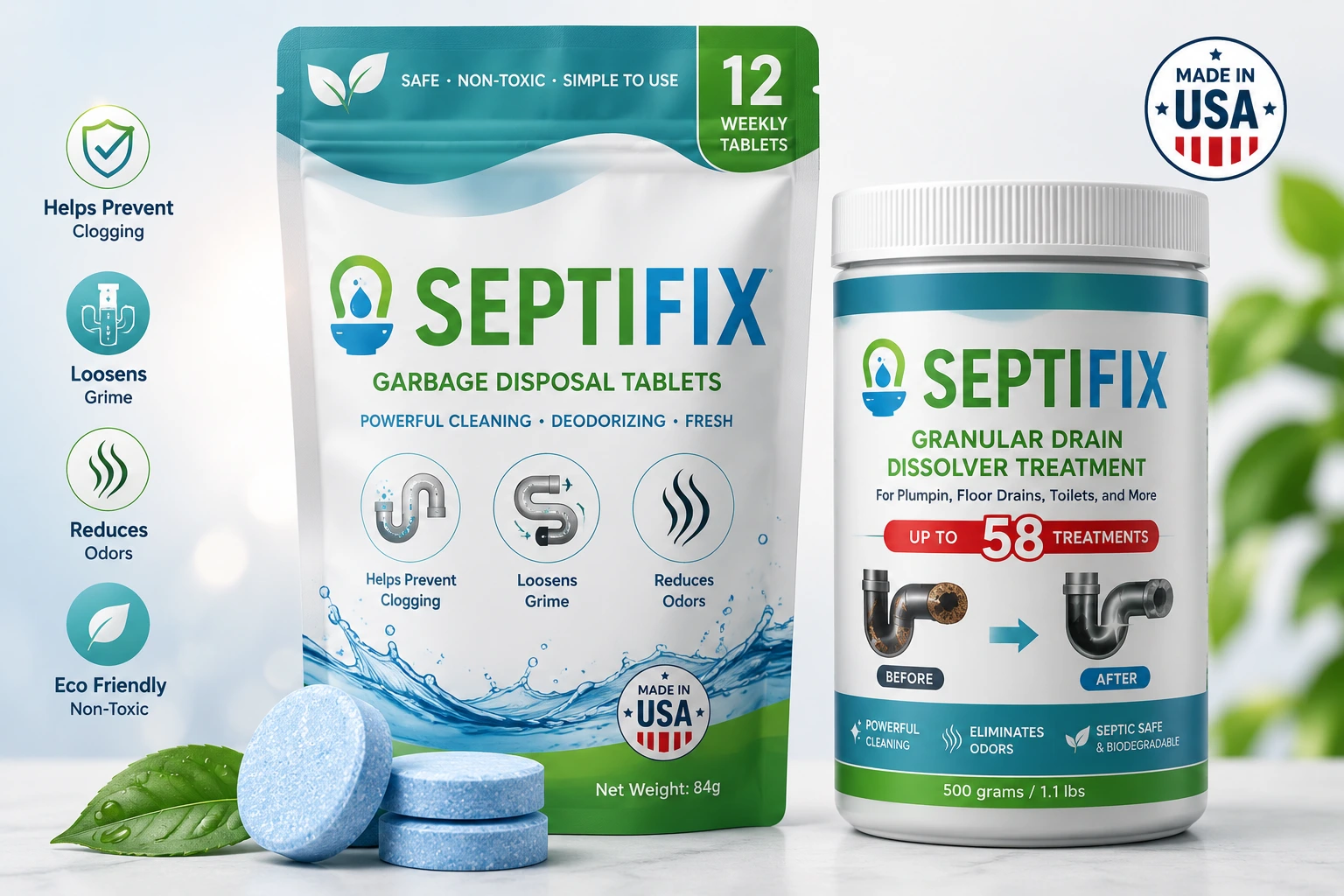
Bacteria-and-enzyme treatments, like Septifix, support the biological breakdown of organic waste, according to the manufacturer, which may help the system process waste more efficiently and can slow the rate of solids accumulation somewhat. But "slow the rate" is very different from "eliminate the need." Solids still accumulate over time in any septic system, treatment or not.
Why Neither Replaces The Other
- Pumping doesn't support the bacteria that treatment products are designed to help
- Treatment doesn't physically remove the solids that pumping addresses
- They operate on different parts of the same overall problem, biological breakdown and physical removal
- Skipping pumping because you use a treatment product is one of the most common, and most costly, misunderstandings in septic care
See Current Septifix Pricing
A monthly complement to professional pumping, not a substitute.
Check Current PriceCan Treatment Affect Your Pumping Schedule At All?
It may, modestly. If a treatment genuinely supports more efficient waste breakdown, it's plausible that solids accumulate somewhat more slowly, which could mean your system stays within a normal service interval more comfortably. This is a meaningfully different claim than "treatment lets you skip pumping," and it's worth not overstating. Our guide on how often to pump a septic tank covers the actual factors that determine your real schedule, which should always be your primary reference, not treatment use.
The Right Approach: Both, Not Either
The most effective septic maintenance routine uses both: professional pumping on a consistent schedule, and a monthly treatment to support bacterial health in between services. Neither one is optional if you want to minimize risk of a costly failure. For the full picture of what a treatment product like Septifix is actually designed to do, see our Septifix Review 2026 and does Septifix really work.
Frequently Asked Questions
Can I skip pumping if I use septic tank treatment every month?
No. Treatment supports bacterial activity but doesn't physically remove accumulated solids. Skipping pumping regardless of treatment use significantly increases the risk of a costly system failure.
Does treatment reduce how often I need to pump?
It may modestly slow the rate of solids accumulation, but this shouldn't be relied on to significantly extend your pumping interval. Follow a schedule based on your tank size and household use, not treatment use.
Why do some products market themselves as reducing sludge if they don't replace pumping?
Supporting more efficient bacterial breakdown can genuinely help manage sludge levels somewhat, but "helps manage" is different from "eliminates the need for removal," which is an important distinction to keep in mind when reading marketing claims.
What happens if I never pump my tank?
Solids eventually overflow into the drain field, which can cause expensive damage and even complete system failure, regardless of whether you're using a treatment product.
Final Thoughts
Septic tank treatment and professional pumping aren't competing solutions, they address different parts of the same system. Treatment supports the biological process; pumping physically removes what that process can't fully break down. Understanding this distinction is one of the most important things a septic homeowner can know, since assuming otherwise is a common path toward an expensive, avoidable repair.