

Quick Answer
Septic tank treatment may help with slow drains and reduce backup risk when the underlying cause is a tank with reduced bacterial activity or gradual solids buildup, since supporting that biological process can help the system run more efficiently. It won't help, and won't prevent backups, when the cause is a physical clog, a blocked vent, or a drain field that's already failing, those require direct intervention, not a treatment product.
Causes Treatment May Help With
- Slow drains related to reduced bacterial activity from harsh chemical use or heavy water use
- Gradual sludge buildup contributing to a tank operating less efficiently than it should
- General routine maintenance that helps keep the system running smoothly between professional services
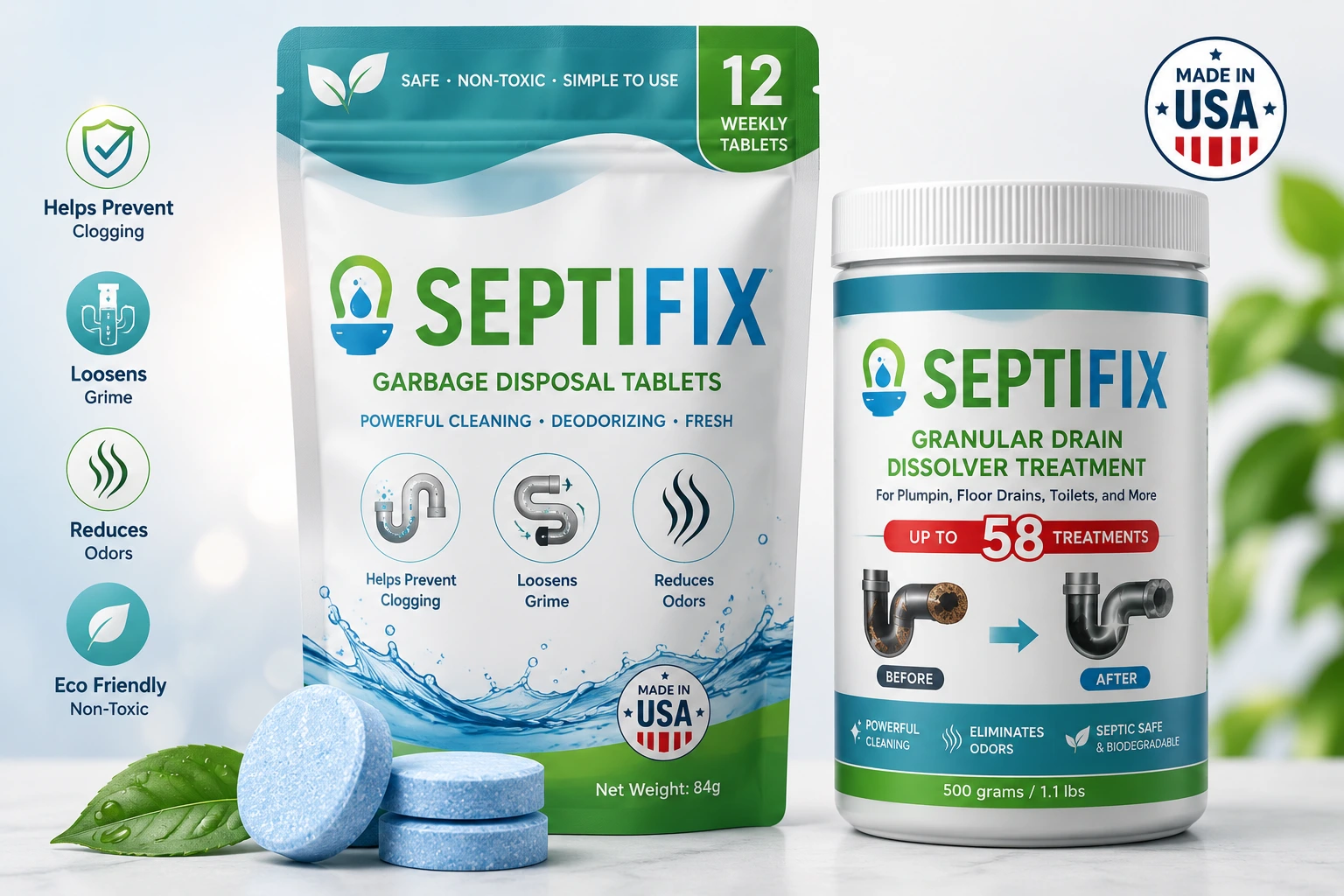
In these cases, a monthly bacteria-and-enzyme treatment, like Septifix, is designed according to the manufacturer to support the process that addresses these underlying conditions, which may translate into fewer or less severe slow-drain episodes over time.
Causes Treatment Can't Help With
- A physical clog in the pipe between the house and the tank
- A blocked plumbing vent restricting airflow
- Tree root intrusion into pipes
- A drain field that's already failing or oversaturated
- A tank that's significantly overdue for pumping
For these causes, treatment won't resolve the issue, and continuing to rely on it while the underlying problem persists just delays getting the actual fix you need. Our guides on what causes sewage backups and why is my toilet gurgling cover these mechanical causes in more detail.
See Current Septifix Pricing
Support the biological process behind routine drainage efficiency.
Check Current PriceHow This Connects To Backup Prevention
Backups are often the end result of an overfull tank pushing wastewater back toward the house. If treatment genuinely supports more efficient waste breakdown, it may modestly reduce the pace at which a tank fills toward capacity, which is a meaningful but limited connection to backup risk. It's not a direct "prevents backups" claim, it's a supporting factor within a broader maintenance routine that also includes consistent pumping. See does septic tank treatment replace pumping for more on that distinction.
A Realistic Role, Not A Cure-All
The honest framing is: treatment supports one contributing factor among several that lead to slow drains and backups. It's a reasonable, low-effort part of a maintenance routine, not a guarantee against these problems occurring. For the full evaluation of what the product does and doesn't claim, see our Septifix Review 2026.
Diagnosing Your Specific Situation
If you're currently dealing with slow drains, the most useful first step is figuring out whether the cause is local (a single fixture) or system-wide (multiple drains at once), since that distinction points toward very different causes and solutions. A treatment product is worth considering as part of ongoing prevention regardless, but it shouldn't be your first response to an active, unresolved slow-drain problem, that calls for diagnosis first.
Frequently Asked Questions
Will septic treatment unclog a slow drain immediately?
No, treatment supports an ongoing biological process rather than providing immediate mechanical unclogging. A physical clog requires direct intervention, not a treatment product.
Can treatment guarantee I won't get a sewage backup?
No, treatment may support conditions that reduce risk somewhat, but it can't guarantee prevention, especially against causes like clogs, root intrusion, or a failing drain field that it doesn't address.
My drains are slow in just one bathroom, will treatment help?
Probably not, an isolated slow drain in one location usually points to a local plumbing issue rather than something a tank-wide treatment product addresses.
Should I use treatment after a backup happens?
Address the immediate cause of the backup first with a professional. Treatment can be part of your ongoing routine afterward, but it's not the appropriate response to an active backup.
Final Thoughts
Septic tank treatment has a real, but limited, connection to slow drains and backup risk, it supports one contributing factor among several. For issues rooted in reduced bacterial activity or gradual sludge buildup, it's a reasonable part of prevention. For clogs, blocked vents, root intrusion, or a failing drain field, it's the wrong tool entirely, and those need direct professional attention.